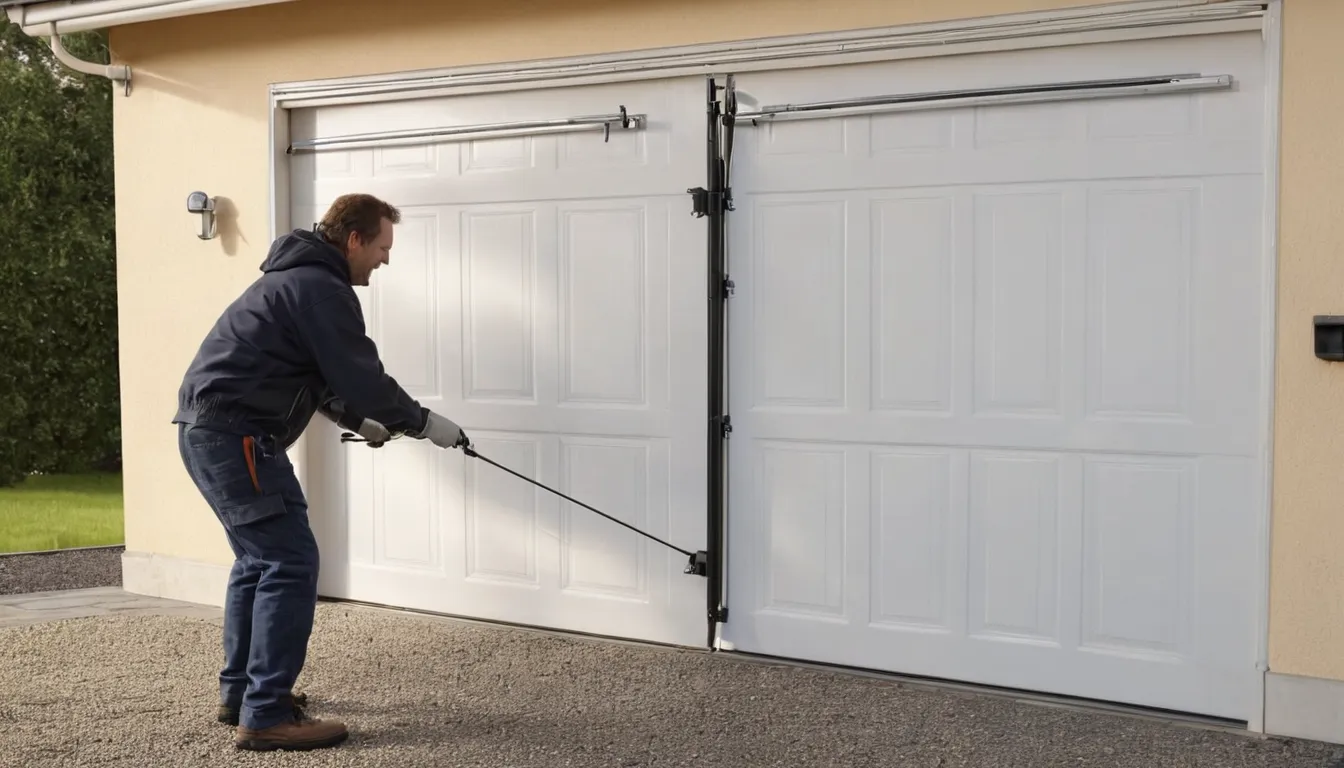
A garage door spring holds the full weight of the door. When it breaks, the door gets heavy, jerky or stuck. Springs are under tight tension, so this is a job to hand off. You can check the basics, keep the area clear and then call a pro.
Linkextended Garage Doors is a referral service. We do not do the repair. We connect homeowners in Orland Park and the Orland Park area with independent local providers who handle spring work with the right bars, gauges and safety steps. Check, then call. Do it right once.
Broken Spring? Stop Here First
If you just heard a loud bang from the garage, stop. Do not pull the release cord. Do not push the opener button again. A door with a broken spring can be many times heavier than it feels.
Keep kids and pets out of the garage. Park the car outside if it is safe to do so. Then read on.
What You Can Safely Do Yourself
You can look, listen and write things down. That helps a provider come prepared.
- Look at the spring above the door. Is there a gap in the coil?
- Check for a loose cable hanging near the side of the door.
- Take a photo of the spring and the label if you can read it.
- Write down the door size and whether it is a single or double.
That is where the hands-on part ends. Know where to stop.
How to Tell if a Spring Is Broken
The signs are easy to spot once you know them.
- A loud snap or bang from the garage.
- The opener hums but the door will not lift.
- The door rises a few inches, then drops.
- A visible gap in the coil of a torsion spring.
- A cable that has gone slack or bunched up.
- The door feels very heavy when lifted by hand.
One caution. A stuck door does not always mean a bad spring. A bent track or a jammed roller can look the same. A provider can sort out which it is.
Torsion Springs and Extension Springs
Most homes have one of two types.
Torsion springs
These sit on a bar above the door opening. They twist to store energy. They tend to last longer and lift the door more smoothly. Many newer ramps and ranch-style garages use them.
Extension springs
These run along the sides of the door, beside the tracks. They stretch and shrink as the door moves. Older frame homes often have them. A broken one can whip loose, so a safety cable should run through each one.
Not sure which you have? Take a photo and share it with the provider.
Why Springs Are Not a DIY Job
I like fixing things around the house. Springs are the one part I leave alone. The tension in them can cause serious injury. Winding bars slip. Set screws fail. A mistake can send metal flying.
Providers use winding bars sized for the job, and they know the right turns for your door weight. They also check the cables, drums and balance. Skip the shortcut. Do it right once.
What a Spring Replacement Visit Includes
Expect a clear, step-by-step visit.
- The provider checks the door weight and balance.
- They release the remaining tension in a safe way.
- Old springs come out and new ones go in, sized to your door.
- Cables, drums and bearings get a look and a tune-up if needed.
- They lubricate moving parts and test the door.
Many providers replace springs in pairs on a double door, since the second one is often close to failing.
Standard Springs vs. High-Cycle Springs
Standard springs are rated for about 10,000 open-and-close cycles. That can be around seven years for a family that uses the garage as the main entry. High-cycle springs are built for more cycles and last longer.
If your garage is your front door, a longer-life spring may be worth a quote. Ask the provider to price both so you can compare.
Cold Snaps, Humidity and Spring Wear
Cold winters and deep frost make metal stiff. Hot, humid summers can speed up rust. Both put stress on springs. A light coat of garage door lubricant on the coils, a few times a year, helps. Wipe off drips so they do not stain the floor.
While you are at it, check track alignment. A bent or loose track makes the springs work harder.
Spring Work and Your Home's Value
A garage door that works well is part of how a house looks and sells. A buyer or inspector often tests the door. A properly done spring job keeps the door balanced, protects the opener from strain and avoids damage to the door panels.
If you are also thinking about a new garage door opener, mention it during the visit. A balanced door is easier on a new opener.
Need Help Soon? Emergency Garage Service
If the car is stuck inside or the garage will not close, ask about emergency garage service. Availability varies by provider, so Request a callback to check who can respond quickly.
Questions to Ask the Provider
Before you agree, ask a few plain questions.
- Is the quote written, and does it list parts and labor?
- Which spring type and size will go on my door?
- Are the springs standard or high-cycle?
- Will you check cables, rollers and track alignment too?
- What warranty comes with the parts and the work?
A good provider answers without rushing you.
Request an Estimate
Tell Linkextended Garage Doors what you see, and we will pass your details to a provider in our network. There is no obligation to hire.
What's Included
Spring diagnosis and sizing
A provider checks door weight and spring type, then picks springs that match your door.
Safe spring replacement
Tension is released with proper bars and the new springs are wound to spec.
Cable and drum check
Worn cables and drums get inspected, since they often wear with the springs.
Balance and safety test
The door is tested for smooth lift, even balance and safe reversing.
Typical Spring Repair Costs in the U.S.
Prices vary by door size, spring type and region. These ranges are typical U.S. figures, not quotes. Ask for a written quote that lists parts and labor before work begins.
| Item | Typical range | Notes |
|---|---|---|
| One torsion spring | $150 – $350 | Includes labor in many cases |
| Pair of torsion springs | $200 – $500 | Common for double doors |
| Extension spring pair | $100 – $300 | Safety cables may add cost |
| High-cycle spring upgrade | $250 – $700 | Longer life, higher price |
| Cable or drum replacement | $100 – $250 | Often found with spring wear |
| Service call or visit fee | $50 – $150 | Some providers apply it to the job |
How It Works
Stop and look
Leave the door alone, keep people clear, and note any gap in the coil or loose cable.
Share the details
Tell us what you saw and heard, and add a photo if you can.
Get matched
Linkextended Garage Doors connects you with a local provider in our network.
Review the quote
Compare the written quote, ask questions, then schedule if it fits.
Why Call Linkextended Garage Doors
Safer for your family
Providers handle high-tension parts with proper tools.
Done right
Correct sizing keeps the door balanced and protects the opener and panels.
Protects home value
A smooth, quiet door supports curb appeal and a clean inspection.
Clear quotes
Ask for written pricing and compare before you decide.
Other Services
Need garage door spring repair services in Orland Park?
Tell us what your garage door is doing. Share the problem and your address, and we will pass it to a local provider in our network.
Garage Door Spring Repair Services FAQ
Can I replace a garage door spring myself?
It is not a safe DIY job. Springs hold a lot of stored force, and a slipped bar can cause serious injury. You can inspect and take photos, then leave the replacement to a provider.
How do I know if my garage door spring is broken?
Listen for a loud bang, then look for a gap in the coil. A door that will not lift, feels very heavy or has a slack cable often points to a broken spring.
How long do garage door springs last?
Standard springs are often rated near 10,000 cycles, which is roughly seven years of heavy daily use. High-cycle springs last longer. Use, climate and upkeep all change the real lifespan.
Request a callback
Tell us what your garage door is doing. Share the problem and your address, and we will pass it to a local provider in our network.
No obligation